
Troubleshooting
Microsoft IIS 10.0 powers millions of websites, but critical vulnerabilities can expose servers to attacks. These 10 exploits—ranked by severity—demonstrate why IT teams must prioritize patching to prevent data breaches, ransomware, and unauthorized access.
HTTP Request Smuggling Exploit CVE-2021-34473

If your IIS 10.0 server runs in a multi-tenant cloud environment, you’re likely exposed to CVE-2021-34473, a zero-day HTTP request smuggling flaw that lets attackers bypass security controls entirely. This exploit manipulates how IIS processes HTTP headers, allowing malicious actors to rewrite server responses or exfiltrate sensitive data without detection.
The vulnerability affects all IIS 10.0 configurations by default, including default installations and custom setups. Attackers exploit inconsistencies in Transfer-Encoding vs. Content-Length header handling, enabling them to smuggle requests past firewalls, WAFs, and even CDNs. Microsoft’s patch (via KB5005048) fixes the core issue, but misconfigurations—like unpatched modules or legacy headers—can reintroduce risk.
This exploit is especially dangerous for shared hosting providers or SaaS platforms where tenant isolation relies on IIS’s default behavior. Prioritize patching and audit header processing rules to block smuggling attempts. ⚡
Server-Side Request Forgery via URL Redirection

When your hybrid cloud setup bridges internal services with the public internet, a single misconfigured URL redirection can turn IIS 10.0 into a backdoor. This Server-Side Request Forgery (SSRF) flaw forces your server to fetch unauthorized internal resources—like database endpoints or admin panels—using crafted HTTP requests, all while appearing legitimate.
The attack exploits IIS's URL redirection module to bypass firewall rules, probing for exposed services on 192.168.x.x or 10.x.x.x subnets. Unlike traditional SSRF, this variant thrives in hybrid environments where internal APIs are accidentally exposed via public-facing load balancers. Microsoft’s Security Advisory ADV200005 highlights how attackers can chain this with authentication bypass flaws to escalate access.
IT admins managing Windows Server 2016/2019 with IIS 10.0—especially those with hybrid cloud integrations—should immediately audit URL Rewrite Module configurations and restrict internal endpoint access to private subnets. 💻
Memory Corruption in ASP.NET Core Module

A single crafted HTTP request can turn your high-traffic website into a smoking crater—literally. The ASP.NET Core Module in IIS 10.0 contains a memory corruption flaw that triggers denial-of-service (DoS) crashes when exploited, leaving your server unresponsive until manually restarted.
This vulnerability stems from improper input validation in the ASP.NET Core hosting bundle, allowing attackers to send malformed requests that corrupt memory buffers. Affecting IIS 10.0 on Windows Server 2016/2019, the flaw requires no authentication—just a well-crafted payload. Microsoft’s patch (via KB5000802) fixes the issue, but unpatched servers risk extended downtime during peak traffic.
If your site handles thousands of concurrent users (e-commerce, SaaS, or media platforms), this exploit could turn a busy day into a costly outage. Prioritize patching—especially if you rely on auto-scaling or high-availability clusters. 💻
Authentication Bypass via WebDAV Misconfiguration

If your IIS 10.0 server still relies on default WebDAV settings, you might be leaving the front door unlocked for attackers. This vulnerability exploits misconfigured WebDAV modules—common in legacy deployments migrated from older Windows Server versions—allowing unauthorized file access without authentication.
The flaw stems from IIS 10.0’s default WebDAV configuration, which often persists even after migrations to Windows Server 2016/2019. Attackers can bypass authentication by sending crafted HTTP requests, granting them full read/write access to sensitive files. Microsoft’s security advisory highlights this as a high-risk issue for environments where hardening steps (like disabling WebDAV or restricting access) were skipped.
This exploit is especially dangerous for enterprise file-sharing systems or development environments where source code or configuration files are stored on IIS. Audit your WebDAV settings now—it’s the first step to locking down this overlooked attack vector. ⚡
Cross-Site Scripting in Default Error Pages

Ever assumed your 404 pages were just harmless placeholders? Attackers weaponize default IIS error handlers to inject malicious JavaScript—stealing session cookies, hijacking user accounts, and even redirecting shoppers to phishing sites. This exploit turns innocent error messages into attack vectors, with e-commerce platforms bearing the brunt when payment data gets exposed mid-checkout.
IIS 10.0’s default error pages often lack proper Content Security Policy (CSP) headers, allowing attackers to embed scripts via crafted URLs. A single compromised error handler can trigger session hijacking for all visitors, with no need for prior authentication. The risk escalates when these pages serve dynamic content (like login forms or cart summaries) without validation. Microsoft’s KB5005039 patch addresses this by enforcing stricter error-page sanitization, but many admins overlook custom error configurations.
If your site processes payments or stores customer data, this vulnerability is a silent data breach waiting to happen. Prioritize custom error pages with CSP headers and disable default IIS handlers until patched. 💻
Improper Input Validation in URL Paths
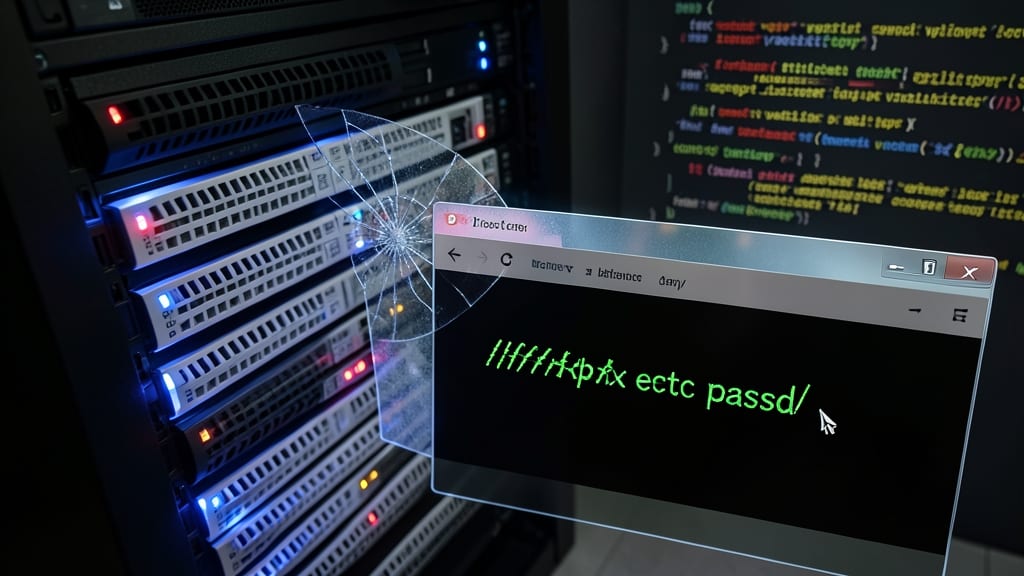
Shared hosting environments under IIS 10.0 face a sneaky but dangerous flaw: improper input validation in URL paths. Attackers exploit this by injecting malicious path sequences like ../../../ to bypass security checks and access restricted files—even configuration files or databases.
The vulnerability thrives when applications fail to sanitize user-supplied input in URLs, allowing directory traversal attacks that escalate from reading sensitive files to executing arbitrary code. Microsoft’s IIS 10.0 default settings often lack strict path validation, making shared hosting setups particularly vulnerable when multiple applications share the same server.
System administrators managing multi-tenant IIS environments—especially those hosting legacy applications—should prioritize this fix. Enabling request filtering and validating all URL paths against a whitelist of allowed directories can block these attacks before they escalate. 💻
SSL/TLS Downgrade Attack Vulnerability

If your IIS 10.0 server handles sensitive transactions—like credit card data or patient records—an SSL/TLS downgrade attack could silently cripple your security. Attackers exploit this flaw by forcing connections to downgrade from TLS 1.2/1.3 to weaker protocols like SSLv3 or TLS 1.0, enabling man-in-the-middle interception of encrypted traffic.
This vulnerability is particularly insidious because it often goes unnoticed in logs. Without proper cipher suite enforcement, IIS may automatically accept downgraded connections, exposing data to decryption. Financial institutions and healthcare providers under HIPAA/PCI-DSS compliance face severe penalties if such breaches occur, making this a compliance nightmare.
Mitigation is straightforward: enforce TLS 1.2+ only in your IIS configuration and disable outdated protocols. Tools like Qualys SSL Labs can audit your server’s exposure. For high-risk environments, consider hardware security modules (HSMs) to add an extra layer of protection. 💪
Infinite Loop in URL Rewrite Module

Imagine your high-availability cluster running smoothly—until a single compromised node triggers an infinite loop in IIS 10.0's URL Rewrite Module, draining CPU and memory until the entire infrastructure stutters to a halt. This isn’t just a slowdown; it’s a resource exhaustion attack designed to cripple redundant systems by exploiting poorly sanitized rewrite rules.
The flaw occurs when attackers craft malicious URLs with recursive rewrite patterns, forcing IIS to reprocess the same request endlessly. A single node under attack can spike CPU usage to 100%, leaving other servers in the cluster overwhelmed as they attempt to compensate. Microsoft’s advisory highlights this as a critical risk for enterprise deployments where failover relies on seamless redundancy.
DevOps teams managing multi-server environments—especially those using load balancers or Kubernetes clusters—must prioritize this patch. The fix involves updating to the latest IIS 10.0 cumulative update and validating rewrite rules with input validation tools. 💪
Privilege Escalation via Misconfigured Modules

If your IIS 10.0 server runs containerized applications, you might be unknowingly handing attackers the keys to your entire host system. This privilege escalation vulnerability exploits default module permissions, letting malicious code break out of isolated containers and execute with full system privileges.
The flaw stems from misconfigured native modules (like FastCGI or ISAPI extensions) granting excessive permissions to untrusted workloads. Attackers can abuse this to escalate from container-level access to full host control, bypassing Docker/Kubernetes security boundaries. Microsoft’s default IIS 10.0 installations often ship with these modules pre-configured with overly permissive settings.
DevOps teams managing microservices or CI/CD pipelines should audit module permissions immediately—especially in shared hosting or multi-tenant cloud environments where containers run untrusted code. A single compromised container could compromise the entire host. 💻
Log Forging Attack in IIS Logs

When forensic investigations hinge on unaltered server logs, attackers can exploit log forging in IIS 10.0 to rewrite audit trails—erasing evidence of breaches, unauthorized access, or even ransomware activity. Unlike other exploits that steal data or crash systems, this attack targets the very records used to prove compliance.
The vulnerability stems from IIS’s default logging mechanisms, which lack cryptographic integrity checks. Attackers inject malicious entries with fake timestamps, IP addresses, or status codes, making it appear as though legitimate traffic occurred while malicious activity goes undetected. This is especially dangerous in healthcare (HIPAA), finance (PCI-DSS), or government sectors, where logs are scrutinized during audits or incidents.
Organizations relying on SIEM tools or log analysis for threat detection must verify log authenticity—especially after patches like Microsoft’s CVE-2022-24523 (addressing similar flaws). Enable Windows Event Log Forwarding and hash-based log validation to detect tampering. 🔧